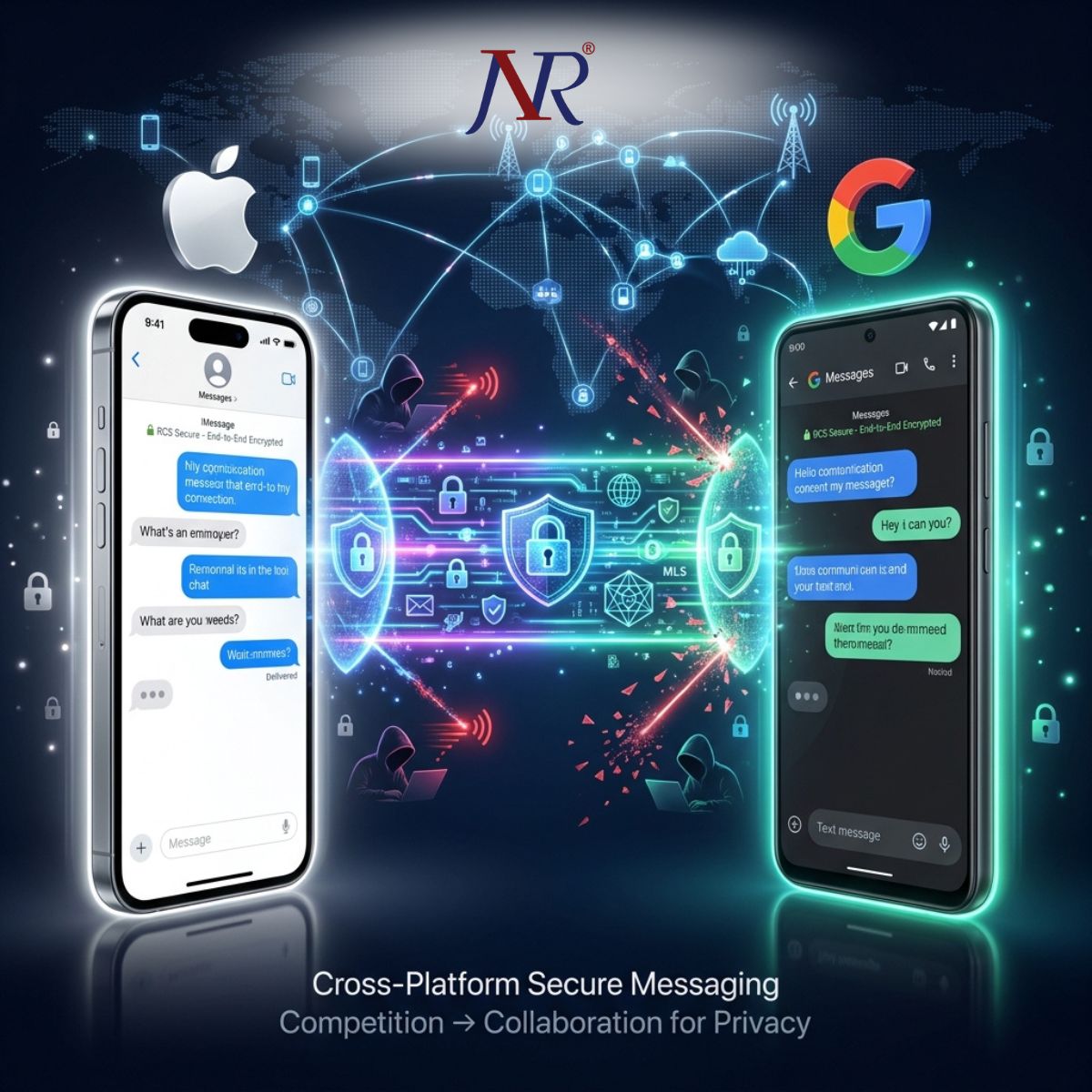
In one of the most significant milestones in cross-platform mobile communication security in recent years, Apple and Google jointly launched end-to-end encryption for RCS messaging on May 11, 2026, bringing genuine privacy protection to conversations between iPhone and Android users for the first time. [cite: 394] The rollout — beginning in beta with iOS 26.5 and the latest version of Google Messages — means that text messages travelling between the two dominant smartphone platforms can no longer be intercepted or read in transit by any third party, including Apple and Google themselves. [cite: 395] The development marks the end of years of cross-platform messaging being conducted effectively in the open, with none of the encryption protections that apps like WhatsApp and Signal had made users accustomed to expecting. [cite: 396]
The E2EE implementation is built on RCS Universal Profile 3.0, the latest version of the Rich Communication Services standard, and uses the Messaging Layer Security Protocol as its cryptographic foundation. [cite: 398] Apple, Google, and the GSM Association collaborated to formally codify the encryption standard into the RCS specification — a process that required cross-industry cooperation across competing platforms that rarely work together. [cite: 399] When both the sender and receiver are using compatible devices and supported carriers, a lock icon appears within the messaging interface to confirm that the conversation is encrypted. [cite: 400] Apple confirmed that encryption is on by default and will be automatically enabled over time for both new and existing RCS conversations, requiring no manual action from users once the feature rolls out to their device and carrier. [cite: 401]
The feature is currently rolling out in beta. [cite: 403] iPhone users need to update to iOS 26.5 and use a supported carrier. [cite: 403] Android users need the latest version of Google Messages. [cite: 404] Carrier support is essential for encryption to activate — both the sender and the receiver must have a participating carrier for the lock to appear. [cite: 404] In the United States, major carriers including AT&T, Verizon, T-Mobile, Boost Mobile, and Xfinity Mobile have already confirmed support. [cite: 405] Canadian carriers Bell, Rogers, and Telus are also included. [cite: 406] The rollout is expected to expand gradually across additional carriers and regions in the weeks ahead. [cite: 406]
While the joint announcement has generated headlines globally, the strategic implications differ significantly between the two companies. [cite: 408] iPhone-to-iPhone messages have long been encrypted via Apple's proprietary iMessage using the PQ3 standard — a protection that already existed and continues to apply. [cite: 409] Apple's own announcement made the distinction explicit, noting that iMessage remains the best way to communicate between Apple devices. [cite: 410] For Google and Android, however, this represents the most important security upgrade to Google Messages since the platform launched in 2014. [cite: 411] With approximately ten billion installs and default status on Samsung devices, Google Messages now has a genuine claim to being a secure cross-platform messaging option — a position previously dominated by WhatsApp across the Android ecosystem. [cite: 411] Android boss Sameer Samat called the rollout an amazing milestone and a big news moment for texting globally. [cite: 412]
The launch of encrypted cross-platform RCS messaging directly challenges WhatsApp's core value proposition — secure messaging regardless of which device or operating system the other person is using. [cite: 414] For years, the absence of encryption in iPhone-to-Android SMS and RCS conversations was the primary argument for directing users toward WhatsApp or Signal. [cite: 415] That argument is now substantially weaker. [cite: 416] Whether Android users will migrate away from WhatsApp toward Google Messages, and whether iPhone users will favour encrypted RCS over iMessage for Android conversations, will define the next chapter of the global messaging landscape. [cite: 416] What is certain is that the baseline for cross-platform messaging privacy has permanently risen — and for billions of users around the world, that is unambiguously good news. [cite: 417]