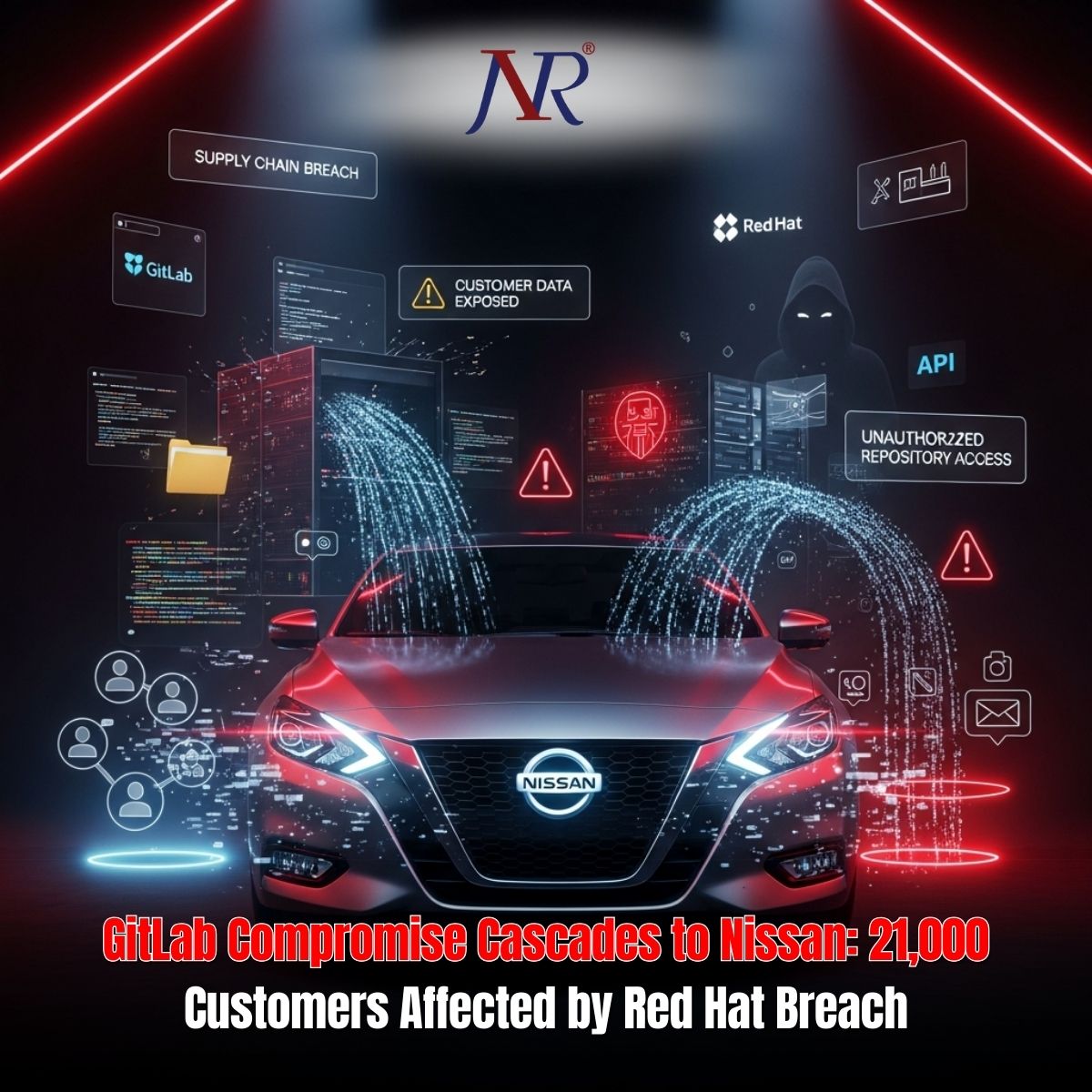
Nissan Motor Corporation has confirmed a significant data breach affecting approximately 21,000 customers of Nissan Fukuoka Sales Co., Ltd., stemming from unauthorized access to a self-managed GitLab instance operated by Red Hat Consulting. The incident demonstrates the cascading security risks inherent in contractor-managed infrastructure and represents a supply chain vulnerability affecting not only Nissan but potentially hundreds of additional Red Hat customers. Threat actors identified as the Crimson Collective claimed to have stolen approximately 570 gigabytes of compressed data from Red Hat's repositories, including Customer Engagement Reports containing sensitive infrastructure details accessible to attackers.
Red Hat detected unauthorized access to its GitLab instance on September 26, 2025, and immediately revoked attacker access and implemented countermeasures. However, formal notification to Nissan was delayed by one week—Red Hat informed Nissan on October 3, 2025. This seven-day notification delay extended the window during which compromised data could be exploited before detection.
Nissan immediately reported the incident to Japan's Personal Information Protection Commission and initiated customer notification procedures. The delayed notification period highlights contractor communication vulnerabilities, where organizational silos between security incident response teams and customer notification processes create exploitation windows.
The compromised dataset includes personal information for approximately 21,000 Nissan Fukuoka Sales customers:
Names: Full customer identification
Addresses: Physical location information enabling identity fraud and targeted phishing
Telephone Numbers: Direct communication channels for fraud and social engineering
Partial Email Addresses: Sufficient for targeted email-based attacks
Sales-Related Information: Vehicle purchase history and service records
Notably, the breach did not include credit card information, payment details, or financial account data, significantly limiting fraud risk from direct financial exploitation. Nissan confirmed that Red Hat's servers contained no additional customer information beyond the leaked dataset, eliminating concerns about further data exfiltration from the same infrastructure.
The threat actor group Crimson Collective claimed responsibility for the breach, disclosing proof of access through file tree screenshots and repository listings on October 24, 2025. The stolen data from Red Hat's 28,000 private repositories includes approximately 800 Customer Engagement Reports containing sensitive infrastructure details, network configurations, API tokens, and architectural specifications for Red Hat customers.
These CERs represent particularly valuable intelligence for adversaries. They contain detailed information about customer network infrastructure, security configurations, and authentication mechanisms that attackers can exploit for targeted compromise of Red Hat customers' environments.
The file tree published by Crimson Collective references major financial institutions (Citibank, JPMorgan Chase, HSBC, Merrick Bank), telecommunications companies (Verizon, Telstra, Telefonica), industrial manufacturers (Siemens, Bosch), airlines, and government entities including the U.S. Senate. This scope suggests the breach potentially exposed infrastructure details for dozens of critically important organizations.
The Nissan incident underscores systemic vulnerabilities in automotive industry supply chain security. Third-party contractors managing critical infrastructure must implement equivalent security controls to primary organizations, yet cost pressures and oversight gaps frequently result in substandard security practices.
Nissan's decision to outsource customer management system development to Red Hat—and Red Hat's decision to operate self-managed GitLab instances without enterprise-grade security controls—created vulnerability chains extending from contractor infrastructure to customer data exposure.
Nissan has committed to strengthening contractor oversight, enhancing information security protocols, and implementing more rigorous security controls across third-party relationships. The company is directly notifying affected customers and advising them to remain vigilant against phishing attempts, fraudulent communications, and suspicious telephone calls.
As of disclosure, Nissan reports no evidence that compromised customer data has been exploited for fraudulent purposes or sold on underground markets. However, the combination of names, addresses, and phone numbers provides sufficient information for comprehensive social engineering campaigns targeting affected customers.
The incident reinforces that data breaches rarely occur in isolation—they represent systemic failures in contractor security practices, notification procedures, and organizational oversight mechanisms that extend across entire supply chains.